(Based on Elsevier Chapter 32)
✅ 1. Key Definitions (Know These FIRST)
Complementary & Integrative Medicine
Health approaches from outside mainstream medicine that are used with conventional care.
Complementary Therapy
Used in addition to normal medical care.
(Example: meditation + antihypertensive meds)
Alternative Therapy
Used instead of medical care.
(Not recommended unless evaluated carefully.)
Whole Medical Systems
Complete health systems based on different philosophies (e.g., Chinese medicine).
💙 2. Integrative Nursing (Simple Definition)
Promotes healing using:
- Caring relationships
- Evidence-based traditional & emerging therapies
- Whole-person focus
➡️ Nurses must weigh risks & benefits before recommending therapies.
🧘♀️ 3. Nursing-Accessible Therapies (The Ones YOU Can Use)
🌿 A. Relaxation Therapy
Produces a relaxation response by reducing tension.
Types
- Progressive relaxation → tightening & relaxing muscle groups one at the time.
- Passive relaxation → no muscle efforts
Clinical Uses: Lowers BP, decreases tension, reduces symptom distress
Limitations
- Progressive technique may tire patients
- Some patients become overly aware of tension
🌬️ B. Meditation & Breathing
Focuses attention on a single stimulus (a sound, an image) → promotes calmness.
Clinical Uses
- Lowers blood pressure
- Reduces anxiety, depression, hypertension risk
- Helps with addiction relapse prevention
Limitations
- Some patients may become hypertensive (PTDS) . When meditating they may start thinkng about there problems, and because of that ↑ heart rate → ↑ blood pressure. Some breathing techniques can stimulate heart rate.
- Can increase the effects of certain drugs (Sedatives may hit harder, BP medications might lower BP more than expected, Psych meds may produce more noticeable effects)
🌌 C. Imagery
Uses guided mental images to affect physical and emotional states.
Clinical Uses
- Pain relief
- Improves sleep
- Reduces nightmares
Limitations
- Can trigger fear or anxiety (especially PTSD) - (PTDS: post-traumatic stress disorder)
- COPD/asthma patients may have airway constriction (Parasympathic effect or changes in breathing patterns)
🧠 4. Training-Specific Therapies (Require Special Certification)
📈 A. Biofeedback
Uses electronic instruments to teach control over physiological functions.
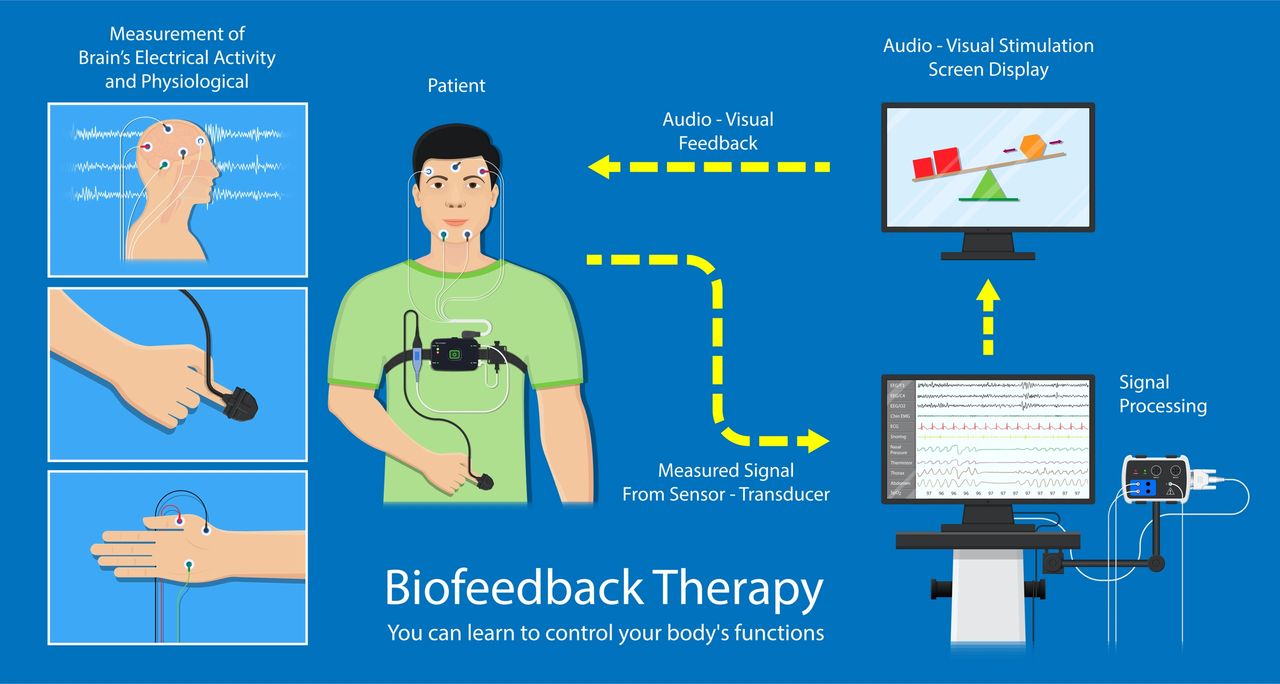
Clinical Uses
Helps with:
- Stroke recovery
- ADHD
- Headaches
- GI & urinary disorders
- Smoking cessation
Limitations
- May uncover repressed emotions (can overwhelm some patients)
🇨🇳 B. Traditional Chinese Medicine (TCM)
Views health as balance of energy (“Qi”).
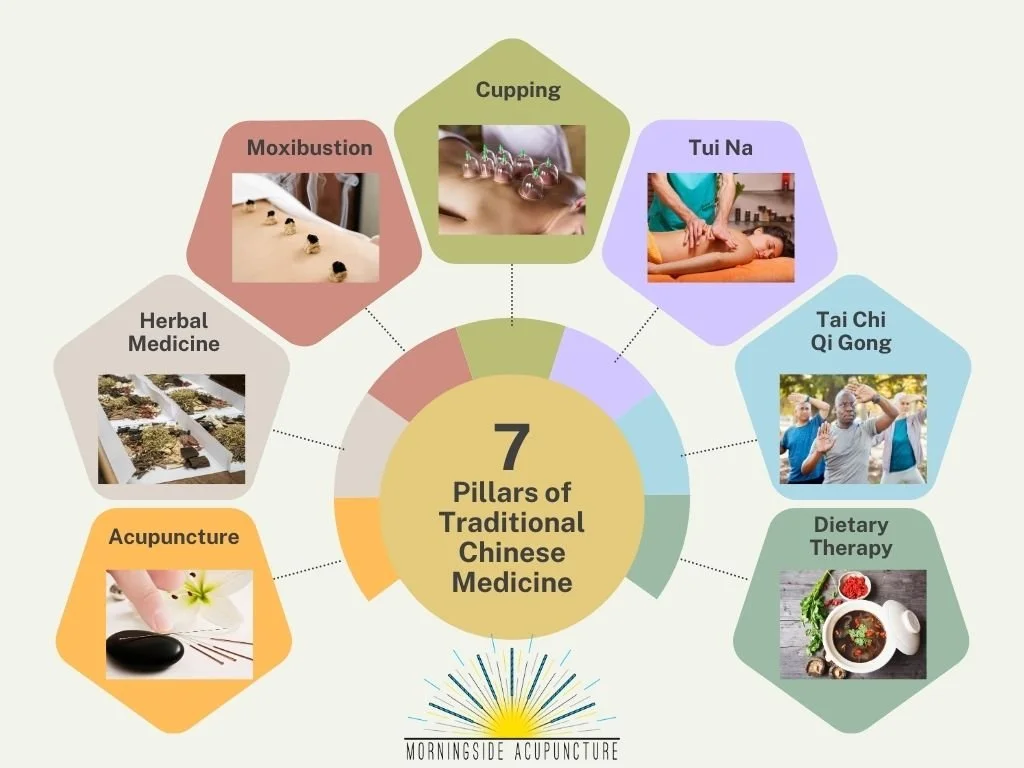
Techniques
- Acupuncture
- Herbal formulas
- Tai chi
- Cupping
- Moxibustion
- Massage (tui na)
Uses
- Fibromyalgia
- Menopausal symptoms
Limitations
- Not regulated in many states
- Concerns about herbal safety
🩸 C. Acupuncture
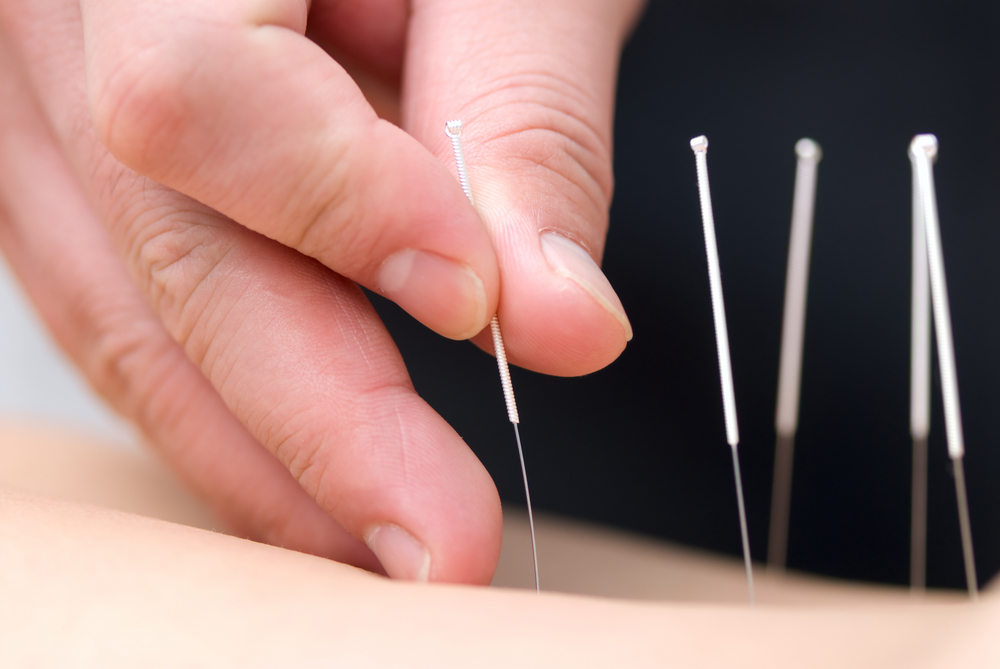
Realigns the flow of Qi through meridians. It’s a practice that involves inserting thin needles into the skin to stimulate specific points on the body.
Uses
It is used to treat various conditions, particularly for pain relief, and is also shown to reduce nausea and vomiting. While generally safe when performed by a qualified practitioner, common side effects can include minor bleeding or soreness.
Limitations (Just think, these are actual “needles”)
- Avoid in bleeding disorders, skin infections
- Use caution in pregnancy🎈, hepatitis, HIV
- Needle complications are rare
✋ D. Therapeutic Touch
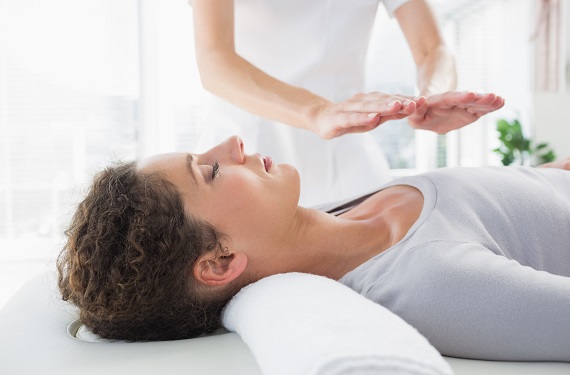
Uses the hands to manipulate human energy fields. Is performed by placing hands a few inches away from the body, though gentle contact is also possible
Five Phases
- Centering
- Assessing
- Unruffling
- Treating
- Evaluating
Uses
- Pain
- Anxiety
- Dementia
- Trauma
Limitations
- Not appropriate for patients sensitive to touch or energy techniques
🦴 E. Chiropractic Therapy
Manipulates the spine to improve structure–function relationship.

Uses
- Low back pain
- Osteoarthritis
- Pediatric asthma
- Dysmenorrhea
- Headaches
Limitations
Do NOT use in:
- Bone infection
- Myelopathy
- Fractures
- RA
- Osteoporosis
It’s just doesn’t make sense to put pressure on weak bones, right 😄. Risk ranges from mild discomfort → serious injury.
🌱 F. Natural Products & Herbal Therapies
Herbs = not regulated by FDA. 😟 So, it’s hard to trust what kind of stuff u are actually consuming.
Look for USP-verified supplements.
Limitations
- “Natural” ≠ “safe”
- Many interact with medications
🌟 5. The Role of the Nurse
Nurses must:
- Understand cultural & spiritual beliefs
- Guide patients to safe, evidence-based CAM methods
- Educate on combining CAM with medical treatment
- Prevent patients from abandoning needed therapy
🧠 6. Memory Tricks (High-Yield)
3 CAM therapies YOU can perform without certification
RIM = Relaxation, Imagery, Meditation
TCM = “MAC-CHTQ”
- Moxibustion
- Acupuncture
- Cupping
- Chinese Herbs
- Tui Na
- Qi Gong / Tai Chi
Acupuncture Safety Red Flags
BIP
- Bleeding disorders
- Infections (skin)
- Pregnancy caution (Just think on the pregnancy as a Balloon🎈, u don’t put needles on a balloon .
📝 7. Quick Exam
Meditation helps with: ➡️ Lower muscle tension ✔